
Last Updated: November 5, 2026
Quick Summary
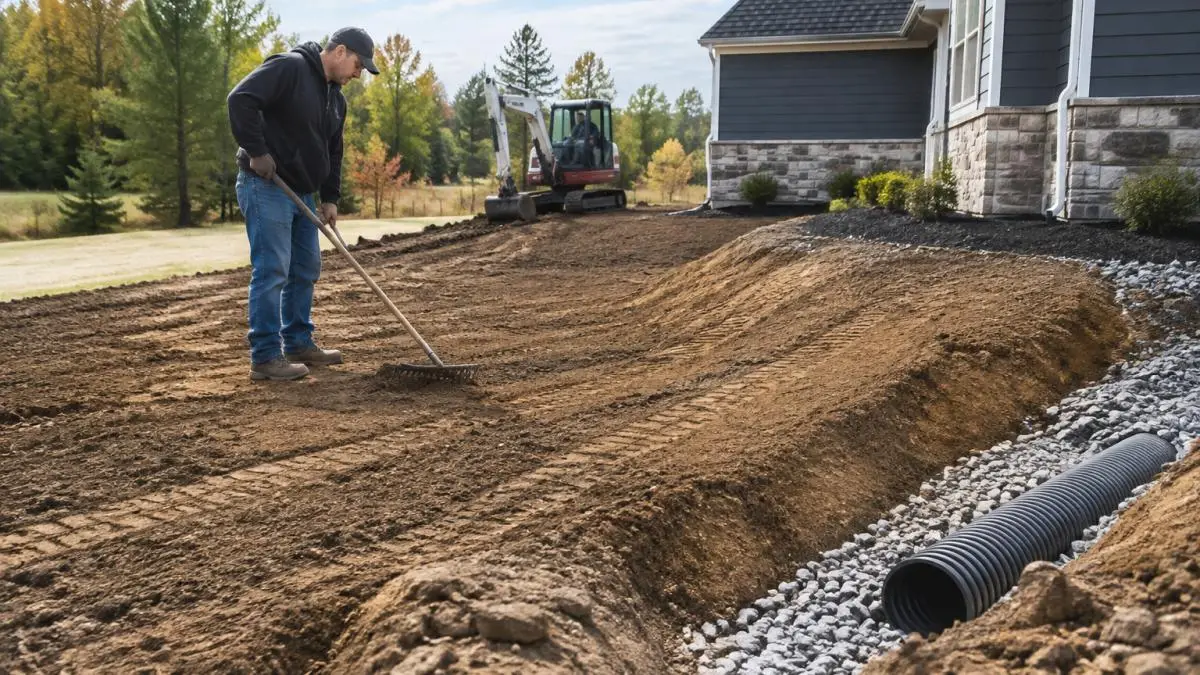
Grading for drainage means shaping the soil so rain and melting snow flow away from your home instead of pooling against it. Good grading works with gravity, sloping the ground down and away from the foundation. Poor grading can seep water into basements and damage the foundation.
- Walk the perimeter of your home after rain to see where water collects and which way it flows.
- Ground next to the foundation should slope away from the house.
- Puddles that stay for hours near the foundation signal that water is not draining away.
- Soil that has sunk or pulled away from the walls means it is shifting near the foundation.
- Regrading the soil usually fixes the problem, and a qualified crew can recommend the right fix.
Table of Contents
- Why Grading for Property Drainage Matters
- Signs of Poor Yard Grading to Check For
- Checking Proper Slope Away From House and Fixing Yard Drainage Problems
- Frequently Asked Questions
Why Grading for Property Drainage Matters
Water that sits next to your house can cause real damage over time. Grading for drainage means shaping the soil so rain and melting snow flow away from your home instead of pooling against it. At Davis & Company, a family-owned business serving Mid-Michigan since 2015, we know how a simple slope problem can lead to wet basements and soggy lawns.
Good grading for drainage works with gravity. The ground should slope down and away from the foundation so water moves off the property.
Poor grading can lead to:
- Water seeping into basements and crawlspaces
- Soil washing away near the foundation
- Standing water in the yard after every storm
- Damp spots that invite pests and mold
For a closer look at how grading fits into a larger project, see our Complete Guide to Excavation.
Signs of Poor Yard Grading to Check For
Look at your yard after a heavy rain. Standing water near the house is one of the clearest signs of grading trouble.
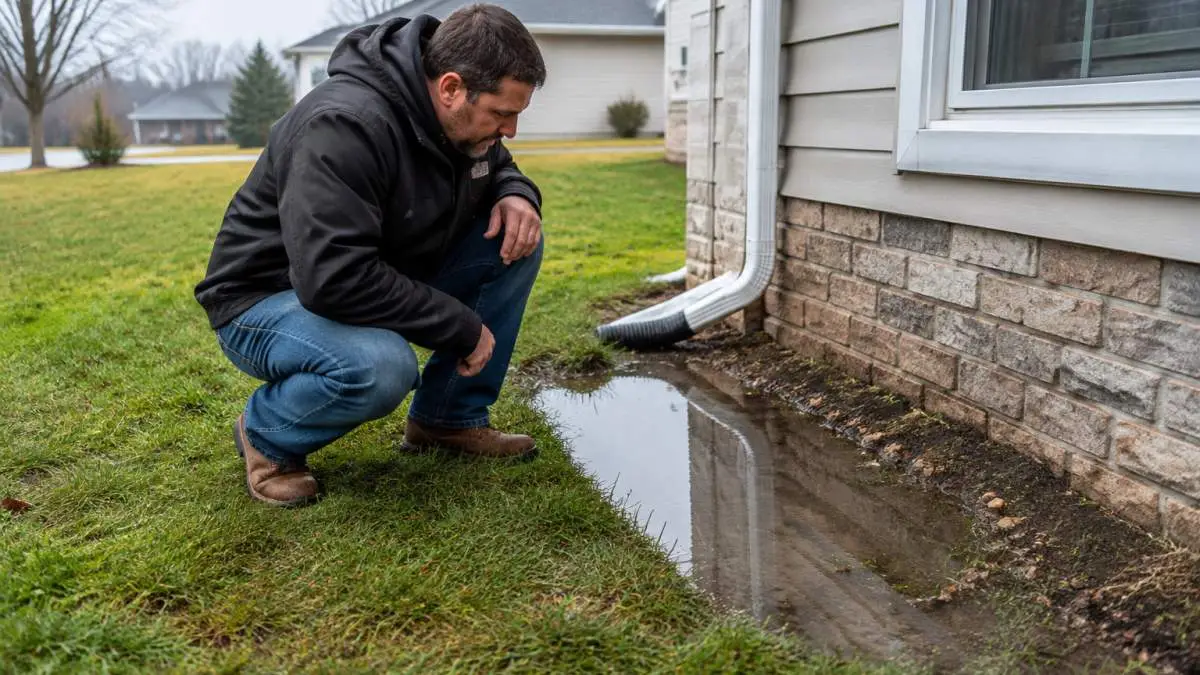
Other signs to watch for:
- Puddles that stay for hours near the foundation
- Soil that has sunk or pulled away from the walls
- Water that runs toward the house instead of away from it
The article lists several signs that point to grading trouble around your property.
| Sign | What it indicates | Action |
|---|---|---|
| Puddles that stay for hours near the foundation | Water is not draining away from the house | Regrade the soil |
| Soil that has sunk or pulled away from the walls | Soil is shifting near the foundation | Regrade the soil |
| Water that runs toward the house | Slope is directed back toward the walls | Correct the slope away from the house |
| Standing water in the yard after every storm | Poor grading holds water on the property | Regrade the soil |
Checking Proper Slope Away From House and Fixing Yard Drainage Problems
Start by walking the perimeter of your home after rain. Note where water collects and which way it flows. Ground next to the foundation should slope away from the house. If you find low spots or soil sloping back toward the walls, the grade needs correcting.
Fixing the problem usually means regrading the soil so the surface drops away from the structure. A qualified crew can assess the slope and recommend the right fix. You can contact Davis & Company for a free estimate, or read about why French drains often fail before choosing a solution.
For larger correction work, our site prep and grading services can handle regrading projects, and our excavation services cover drainage projects.
Frequently Asked Questions
Is a 1% slope enough for drainage?
A common guideline is a slope of about 6 inches of fall over the first 10 feet away from the foundation, which is roughly 5%. Many homeowners aim for a minimum of 2% on lawns and hardscape, but the right figure depends on soil type, the surrounding terrain, and whether water can reach the home from higher ground. A grade that looks level to the eye often fails to move water, so measuring the actual fall with a level and a straight board is a practical way to check it. If the slope is shallow or reverses near the house, regrading is usually the fix.
How can you tell if your property has a drainage problem?
Watch for water that stays on the surface for more than a day or two after rain, soggy patches near the foundation, water seeping into a basement or crawlspace, and soil washing out in channels. Puddles that form beside the house or along a fence line often point to a grade that slopes toward the building instead of away from it. Check the yard during or right after a heavy rain, since that is when the flow path is easiest to see. If several of these show up together, the grading is worth a closer look before adding gutters or drains.
When should you hire a professional to regrade your property?
Consider professional help when the water problem reaches the foundation, when the slope needs to change across a large area, or when the fix would require moving significant soil. A crew can set elevations with survey tools and make sure water is directed to a safe outlet rather than onto a neighbor’s land. Davis & Company offers site preparation and grading services, and you can request a free estimate to review your yard before you commit to a plan.
