
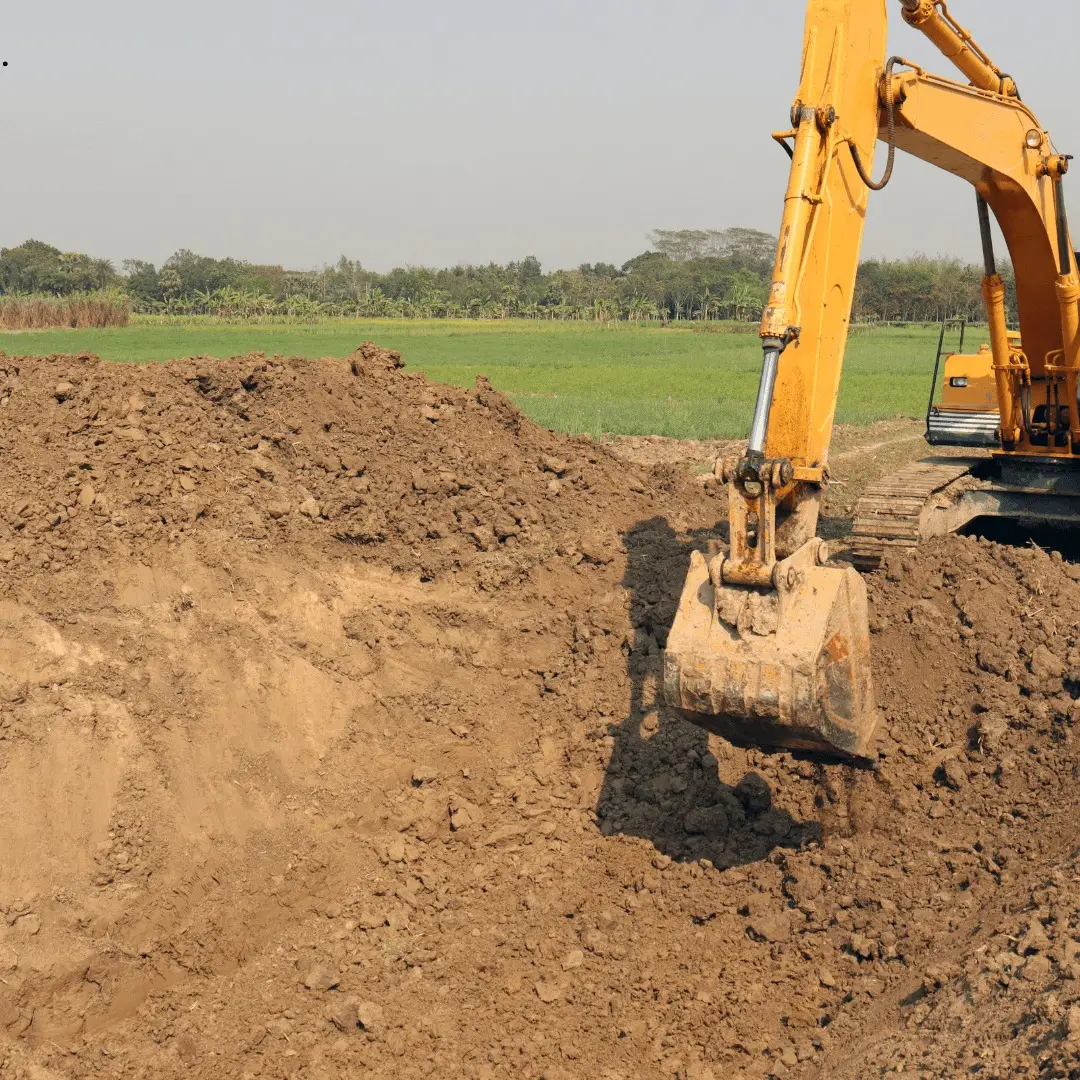
If you’re planning any major ground work — a new home, a pond, better drainage, or a utility line — excavation is where it starts. There are four main types of excavation used on residential and commercial projects: trench excavation, foundation excavation, drainage excavation, and pond excavation. Each one serves a different purpose, uses different equipment, and comes with its own set of considerations. Here’s what Mid-Michigan property owners need to know before the digging begins.
What Is Excavation?
Excavation is the process of moving earth — cutting into the ground, removing soil, and reshaping a site to prepare it for construction or other use. It’s not just digging a hole. Done right, excavation accounts for drainage, soil stability, frost depth, and what comes after. Done wrong, you get a foundation that settles, a pond that leaks, or a utility trench that collapses.
At Davis & Company, we’ve been doing excavation work across Mid-Michigan since 2015. In that time, we’ve seen what happens when excavation is rushed or underplanned — and we’ve also seen how a well-executed job sets every phase of a project up for success.
Pro Tip: Before any digging begins in Michigan, MISS DIG (dial 811) must be called to have underground utilities marked — it’s the law and it’s free. If you’re hiring a contractor, it’s their legal obligation to contact MISS DIG 811, not yours. If you’re doing the work yourself, the call falls to you. Either way, no digging should begin until all lines are marked.
The Main Types of Excavation
Trench Excavation
Trench excavation creates a long, narrow cut in the ground, typically for utilities — water lines, sewer lines, electrical conduit, or drainage pipe. Trenches for residential utility work usually run 18 inches to 4 feet deep depending on what’s being installed.
For water lines in Michigan, frost depth matters. The ground freezes to about 42 inches in a hard winter across the Lower Peninsula. Any water line that runs shallower than that is at risk of freezing, which is why proper trench depth isn’t just a best practice — it’s a cold-weather necessity.
The equipment used for trench work is typically a compact excavator or a dedicated trenching machine. The right choice depends on soil type, trench length, and how much room there is to work.
Foundation Excavation
Foundation excavation is one of the most demanding types of excavation work. You’re not just moving dirt — you’re creating a precise, level surface at a specific depth, within tight tolerances, so that the footings and foundation walls sit exactly where they need to.
On a typical Michigan home build, foundation excavation goes 4 to 6 feet below grade, accounting for frost depth and basement height. The Michigan Residential Code requires footings to be placed at least 42 inches below grade across most of the state. The excavator operator needs to understand soil type, how it drains, and whether any areas need compaction work before the foundation crew comes in.
We’ve seen projects where foundation pads looked acceptable at the surface but had soft spots underneath — spots that only show up when you know what to look for. Walking a site carefully before you dig is just as important as the digging itself.
Did You Know? Michigan’s clay-heavy soils across much of the Mid-Michigan region can hold water and shift under a foundation if not properly assessed. Soil compaction testing before pouring is a step some contractors skip — and one that homeowners often regret skipping later.
Drainage Excavation
Drainage excavation is all about directing water where you want it to go, rather than where gravity decides. This includes French drains, swales, catch basins, and culvert tie-ins.
Poor drainage is one of the most common property problems we encounter in Mid-Michigan. A low-lying yard, a driveway that floods every spring, or a basement that takes on water after heavy rain — in many cases, the fix is excavation to regrade the ground, install drainage pipe, or create a path for water to flow away from structures.
A good drainage excavation job looks simple when it’s done. What you don’t see is the work that went into calculating slope, sizing the pipe correctly, and making sure the outlet point actually accepts the volume of water the system will move.
Pro Tip: When adding drainage to an existing property, always check where the water will end up. Redirecting water onto a neighbor’s property or into a road ditch without proper coordination can create legal issues and doesn’t actually solve the problem.
Pond Excavation
Building a farm pond or a backyard water feature in Michigan requires more planning than most people expect. It’s not just about digging a hole and filling it with water.
Soil permeability matters enormously. Sandy soil won’t hold water well — a pond dug into a sandy site will drain faster than it fills without a liner or clay compaction layer. Before we dig any pond in Mid-Michigan, we evaluate the soil type and water table to determine the right approach.
Michigan permit requirements also come into play. EGLE requires a permit for any pond excavation within 500 feet of a lake, stream, or regulated drain. Local townships may have additional requirements regardless of pond size — some require permits for ponds over 200 square feet. If your project triggers any of those thresholds, check with your local municipality and EGLE before breaking ground.
Did You Know? A properly constructed farm pond in Michigan can serve multiple purposes — livestock water supply, fire suppression, recreation, and wildlife habitat. Getting the depth, shape, and inlet/outlet configuration right from the start makes all the difference.
Equipment Used in Excavation
The type of equipment on a job site reflects the scope and precision the work demands. Here’s a practical overview:
A standard excavator (also called a trackhoe) is the workhorse of most jobs. It handles foundation work, pond digging, and drainage excavation. Bucket sizes vary depending on how much material needs to move per pass.
A compact excavator fits through tighter spaces — useful for urban lots, side yards, or sites with limited access.
A bulldozer is used when larger volumes of material need to be pushed, spread, or rough-graded across an open area.
A skid steer is useful for backfilling, material handling, and cleanup work once the primary excavation is complete.
For utility trenching, a dedicated trenching machine is faster and more efficient than using a full-size excavator when soil conditions allow.
Permits and Timelines in Michigan
Permit requirements for excavation depend on the project type and location. Foundation work typically requires a building permit through your local township or municipality. Utility work usually requires permits from the relevant utility providers and local authority having jurisdiction.
For drainage work that affects wetlands, floodplains, or regulated water bodies, EGLE permits may be required. In those cases, the permit process can add weeks to a project timeline, so it’s worth understanding requirements early.
As a general guide on how long excavation takes: a residential foundation dig typically runs one to three days. Pond excavation ranges from one day for a small backyard pond to several days for a larger farm pond. Drainage and utility work varies widely based on linear footage and site conditions.
For projects in Michigan’s shoulder seasons — late fall and early spring — frost and mud conditions can affect scheduling. Saturated clay soils don’t compact well, and frozen ground changes how equipment performs. We factor that in when we schedule jobs and communicate it clearly with clients from the start.
Pro Tip: If you’re planning a project for spring, get your estimate done in the fall or winter. Excavation contractors in Mid-Michigan book up quickly once the ground thaws, and waiting until April often means waiting until June.
How to Prepare Your Property Before the Excavator Arrives
A few things make a real difference in how a job goes:
Know where your utilities are. Contact MISS DIG 811 and have lines marked before your contractor arrives. If you’ve hired a contractor, confirm they’ve placed the call — it’s their legal responsibility, but verifying doesn’t hurt.
Make sure there’s equipment access. Excavators need a clear path to the work area. Fences, low-hanging branches, and tight gates are the most common access issues we run into on residential jobs.
Have a plan for the spoiled material. Excavation generates a significant volume of displaced soil. In some cases it can be redistributed on-site. In others, it needs to be hauled away. That decision affects both the project cost and the logistics, so it’s worth discussing before work begins.
If your project involves drainage or site prep that leads into hydro-seeding or landscaping afterward, talk to your contractor about sequencing. Getting the excavation right makes every downstream step easier.
What Comes After Excavation
Excavation is the first move, not the last. Most projects follow a sequence: once the ground is cut, site prep and grading brings the surface to the correct elevation and slope. Then drainage infrastructure goes in. Then the foundation crew, the concrete crew, or the landscaping phase picks up from there.
Understanding that sequence upfront — and coordinating it — is what separates a project that runs smoothly from one that stalls between phases because nobody thought ahead.
Ready to start your excavation project? Contact Davis & Company for a free site assessment. We’ll come out, walk the property, and give you a straight answer on what the job requires. Call (517) 625-7979 or visit our excavation services page to get the conversation started.
Frequently Asked Questions
What are the main types of excavation? The four most common types used on residential and agricultural projects are trench excavation, foundation excavation, drainage excavation, and pond excavation. Each serves a different purpose and requires different equipment and site preparation.
Do I need a permit for excavation in Michigan? It depends on the project. Foundation work requires a building permit from your local municipality. Pond excavation within 500 feet of a lake, stream, or regulated drain requires an EGLE permit. Always check with your local authority before breaking ground.
How long does excavation take? A residential foundation dig typically takes one to three days. A small pond can be done in a day; a larger farm pond may take several. Utility trenching and drainage work varies based on footage and soil conditions.
What equipment is used for excavation? The most common equipment includes a standard excavator (trackhoe), compact excavator, bulldozer, skid steer, and trenching machine. The right machine depends on the project scope, soil type, and site access.
How does Michigan’s frost depth affect excavation? Michigan’s frost depth reaches roughly 42 inches in the Lower Peninsula during a hard winter. This affects how deep utility lines need to be buried, when excavation can be scheduled in late fall and early spring, and how foundations must be designed to prevent frost heave.