

Last Updated: October 30, 2026
Quick Summary
Preventing contractor disputes starts with a written agreement covering scope, milestone-based payments, and a formal change order process. Confirm every decision in writing, hold weekly check-ins, and keep dated records so problems surface early and stay resolvable.
- Tie every payment to a milestone, not a calendar date, to limit exposure.
- No work proceeds on a verbal go-ahead; if the paper isn’t signed, the change isn’t approved.
- Confirm any phone or field decision by email the same day.
- Name one point of contact per side; side conversations with crew don’t count as notice.
- Keep contracts, change orders, photos, and notices until project end plus years.
Table of Contents
- Start With a Contractor Agreement Checklist Before Work Begins
- Run a Construction Change Order Process That Prevents Surprises
- Contractor Communication Best Practices for Owners and Crews
- How to Resolve a Contractor Dispute Before It Escalates
- Documentation and Recordkeeping That Protect Your Project
- Get a Free Estimate and Build Your Dispute-Prevention Plan
- Frequently Asked Questions
Start With a Contractor Agreement Checklist Before Work Begins
Most contractor disputes start at the kitchen table, weeks before anyone breaks ground, when a handshake replaces a written agreement.
A contractor agreement checklist is a written list of terms both sides agree to before work starts: scope, payment, timelines, and who owns each risk. For help preparing your site and setting expectations before work begins, use our contractor’s checklist.
Here’s what belongs on yours:
- Full legal names of owner and contractor
- Detailed scope of work, in plain language
- Start date and completion milestones
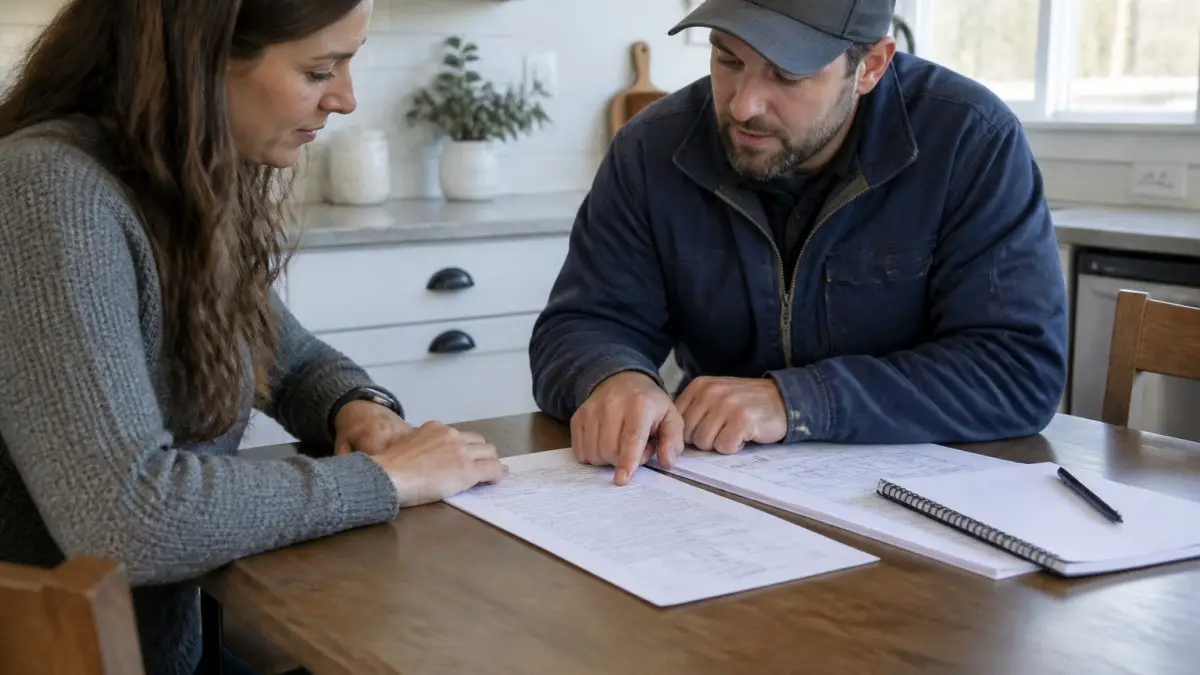
Skip this step and you’re gambling. A verbal quote is not a contract. When a payment dispute or missed milestone lands in your lap, the paper trail is the only thing that settles it.
What a Clear Scope of Work Must Spell Out
A scope of work is the written description of exactly what the contractor will and won’t do, naming materials, quantities, and finished results. Vague phrases like “site prep as needed” invite misunderstanding. Spell out dimensions, grades, and cleanup expectations. If it isn’t written, it isn’t in scope.
Payment Terms, Milestones, and Risk Allocation
Tie every payment to a milestone, not a date. “Half down, half on completion” leaves you exposed if work stalls. Break the project into stages and pay as each passes inspection. Risk allocation means deciding up front who covers delays, weather, and utility surprises, in the contract, not a phone call.
Run a Construction Change Order Process That Prevents Surprises
A construction change order process is the written system for approving work outside the original scope, and the best defense against cost overruns and finger-pointing. Every change gets priced, approved in writing, and logged before anyone touches the site. The common mistake is treating a change order as a receipt instead of a decision record, by the time it’s signed, the work is done and the argument is about price, not scope. Understanding excavation methods, permits, and timelines helps you spot the scope changes that commonly trigger change orders.
Here’s a workflow that keeps changes under control:
- Crew spots a change and submits a written change order request, what changed, why, and what happens if it isn’t approved
- Contractor prices the change in writing, with labor, materials, markup, and time impact noted separately
- Owner reviews and either approves, rejects, or requests a revised price in writing
- Approved change joins the project records before work continues
- Final invoice reflects only approved changes, matched line-by-line to the change log
What Every Change Order Must Contain
A change order that can’t survive a side-by-side read against the original contract is a liability. Each one should carry:
- A unique change order number and the date of the request
- Reference to the original contract and the specific scope line it modifies
- A description of the added, deleted, or substituted work
Work performed on a verbal “go ahead” is a common way a change order dispute starts. If the paper isn’t signed, the change isn’t approved, no matter who said what on the phone.
Written Approval, Authority, and Notice Requirements
Never let work proceed on a verbal approval. Notice requirements should state how fast each side must flag a problem, commonly a set number of days to submit written notice of a potential change and a set number of days for the owner to respond. Name who can approve changes on each side; a project manager who can’t sign is not an approver.
A variation request without written approval is a dispute waiting to happen. Two controls close that gap:
- Approval thresholds. Small changes below a stated dollar threshold can be approved by the project manager; anything above requires the owner’s signature. This keeps small fixes moving without opening the door to large unauthorized work.
- A running change log. Every request, approved, rejected, or pending, gets a number and a status. The log is the single source of truth at final invoice, and it’s what a mediator or court will ask for first.
A change order process only prevents disputes when it has three things: a written request, an itemized price with time impact, and a named approver with a signature. Miss any one and the change becomes a negotiation after the fact.
Contractor Communication Best Practices for Owners and Crews
Good contractor communication best practices come down to one habit: put it in writing, and do it often. Regular communication stops small misunderstandings from growing into claims. A quiet week can feel like progress and hide a brewing delay.
What most guides skip is the mechanics, the cadence, templates, and escalation timeline that turn “communicate well” into something a crew can run. Here’s the system we recommend.
Set a Communication Cadence
- Weekly check-in, a short standing meeting (in person or by phone) with a written agenda: work completed, work planned, open decisions, open changes, and risks. Fifteen minutes is enough if the agenda is fixed.
- Same-day written confirmation, any decision made by phone or in the field gets confirmed by email the same day. “Per our conversation today, we agreed to…” is the cheapest insurance in construction.
- One point of contact per side, a named owner’s representative and a named contractor’s representative. Side conversations with crew members don’t count as notice.
Templates You Can Apply Immediately
You don’t need software to start. Four simple records cover most of the ground:
| Record | What It Captures | When to Update |
|---|---|---|
| Meeting agenda and minutes | Decisions made, action items, owners, due dates | Every weekly check-in |
| Decision log | Each decision, who made it, date, and what it affects | Same day as the decision |
| Notice record | Every written notice sent or received, with date and subject | Same day as sent or received |
| Issue register | Open problems, who owns them, target resolution date | Weekly, at minimum |
A decision log is the single most useful template: when a dispute turns on “who agreed to what,” it answers in one line. The notice record does the same for deadlines, proving when each side was told, often the difference between a valid claim and a missed one.
Early-Warning Indicators and Escalation Timelines
Communication prevents disputes only if it surfaces problems early. Watch for these indicators and respond in writing within a set window:
- Missed milestones with no explanation, request a written status within a few business days
- Requests for early payment outside the schedule, respond in writing before paying
- Work happening without an approved change order, issue a written stop-and-confirm notice the same day
Set escalation steps in the contract: written notice, then a meeting between decision-makers, then mediation or another form of alternative dispute resolution if talks stall. Early intervention keeps a payment dispute from becoming a legal strategy.
A shared project-management platform, version-controlled drawings, and date-stamped photo logs do the same job as paper templates, but only if both sides use them. Pick one system and make it the official record in the contract.
How to Resolve a Contractor Dispute Before It Escalates
To resolve a contractor dispute, act at the first sign of trouble, not after the project stalls. Most disagreements settle through early intervention and negotiation long before anyone needs a lawyer. Our frequently asked questions cover how we handle estimates, services, and communication. The goal is a fix, not a fight.
Early-Warning Signs and Escalation Timelines
Watch for these red flags:
- Missed milestones with no explanation
- Requests for early payment outside the schedule
- Work happening without an approved change order
Documentation and Recordkeeping That Protect Your Project
Documentation and recordkeeping are your insurance policy. Keep every contract, change order, photo, and email in one place. Date-stamped site photos can help when a construction claim questions the condition of the property.
A simple project log works:
| Record | What It Proves | Keep Until |
|---|---|---|
| Signed contract and scope | What was agreed | Project end + years |
| Change orders | What changed and who approved it | Project end + years |
| Site photos | Condition before, during, after | Project end + years |
| Emails and notices | Who knew what, and when | Project end + years |
| Payment receipts | What was paid and when | Project end + years |
Clean records turn a heated argument into a short conversation and make contract administration far easier for everyone involved.
Get a Free Estimate and Build Your Dispute-Prevention Plan
Prevention starts before the first shovel hits the dirt. A clear contract, a written change order process, steady communication, and tidy records handle most of the risk.
At Davis & Company, we’ve been family-owned and operated since 2015, caring for individual projects from the very beginning. We offer free estimates, flexible financing options, and direct communication. Contact us to request your free estimate and start the project on clear terms.
Frequently Asked Questions
How can I prevent a dispute with a contractor?
Prevention starts with a written contractor agreement checklist that covers scope of work, payment milestones, change-order rules, and notice requirements. Put every expectation in writing, including the project schedule and who is responsible for permits. Keep a shared project record of emails, photos, and signed approvals. When a question comes up, ask it early rather than letting a misunderstanding grow. A short weekly check-in with your contractor catches most small issues before they turn into a construction claim.
What should a contractor agreement include?
A clear contract should list the full scope of work, the project schedule and milestones, payment terms tied to completed work, and the construction change order process. It should also name who handles permits and site access, how notice requirements work, and how disputes get resolved. Include a clause on risk allocation and responsibility for damage. Vague contract terms are one of the most common causes of contractor disputes, so read every line before you sign and ask for anything unclear to be written in plain language.
What should I do if a contractor changes the project scope?
Treat any scope change as a formal change order. Ask for the change in writing with the cost and schedule impact spelled out, then approve or reject it before work continues. Never rely on a verbal agreement or a quick text. The construction change order process exists to keep project expectations aligned and prevent cost overruns. If the change is significant, compare it to the original scope of work and document why it is needed. Save the signed approval in your project records.
How should homeowners document contractor communication?
Keep everything in one place: emails, texts, photos of progress, signed change orders, and meeting notes. Send a short summary email after each site visit or phone call confirming what was discussed and decided. Photograph the site before work starts and at each milestone. Good recordkeeping makes it far easier to resolve a contractor dispute because both sides can point to the same written record. If a disagreement does arise, this documentation supports negotiation, mediation, or any formal resolution process.
Ready to start on clear terms? Get a free estimate from Davis & Company and build a project plan that keeps surprises off the site.
