
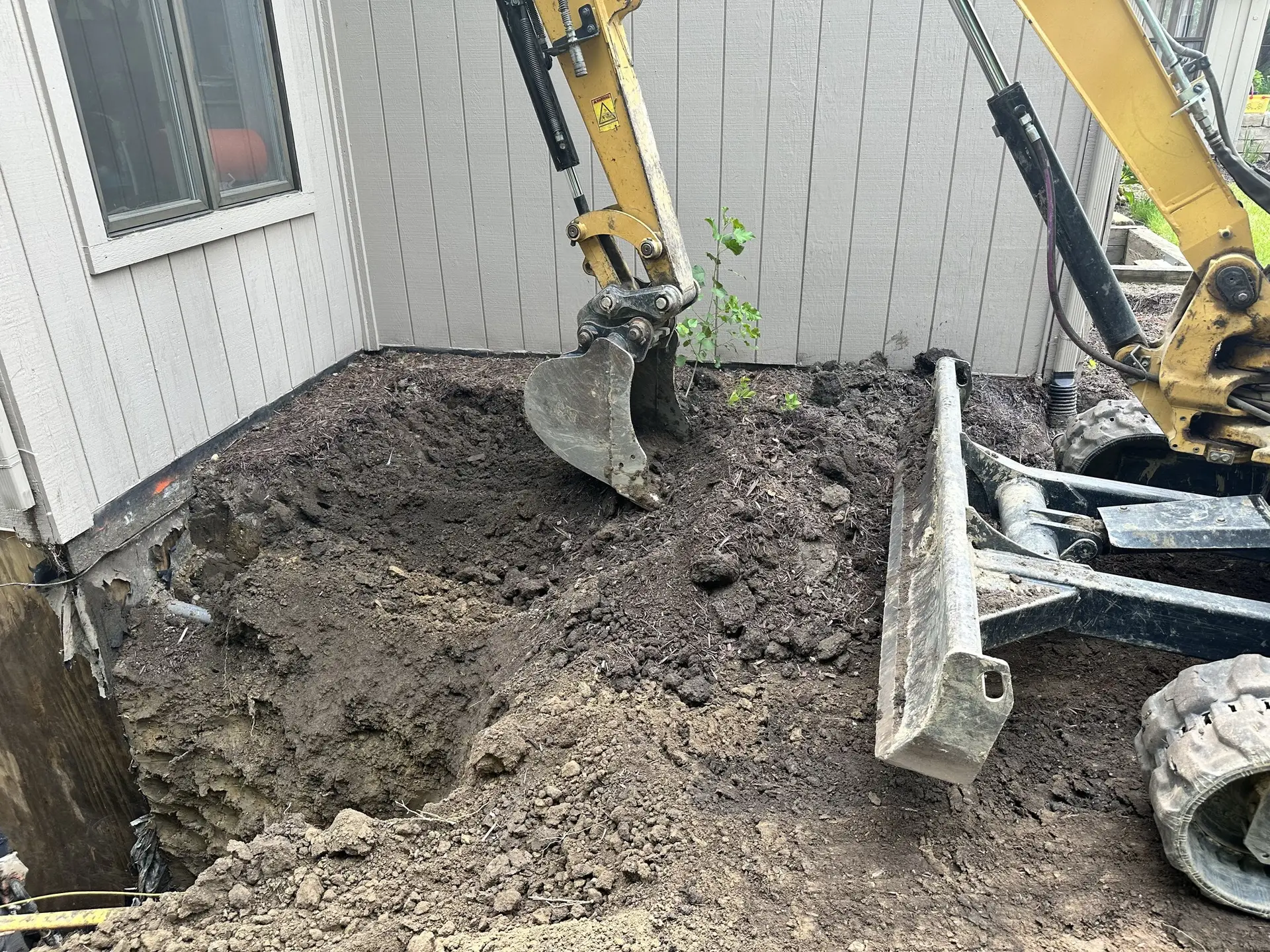
Preparing your property for excavation comes down to four things: get your utilities marked, confirm your permits, clear a path for the equipment, and flag anything you want kept out of the way. Skip one of these, and a one-day dig can turn into a three-day delay. Here’s what actually needs to happen before a crew shows up.
Fences, low branches, and tight gates are the most common holdups our crew runs into on residential jobs, and almost every one of them was avoidable. A blocked gate or an overgrown drive can turn a one-day dig into a return trip, and that’s before anyone has touched a utility line. If you want the full picture on how excavation works before you get to this stage, our guide to the different types of excavation covers trenching, foundation work, drainage, and pond digging in detail. This article is about the part that happens first: getting your property ready.
What Does It Mean to Prepare a Property for Excavation?
Preparing a property for excavation means completing four tasks before the crew arrives. You need to get underground utilities marked, confirm any required permits, clear equipment access to the work area, and flag trees, fences, or landscaping that need protection. Handling these ahead of time keeps your excavation project on schedule and helps you avoid costly surprises once digging starts.
Step 1: Call MISS DIG 811 Before Anything Else
This is the step that matters most. Before any digging happens in Michigan, the property has to be checked for underground utilities through MISS DIG 811. Call at least three business days before your planned start date, or submit a request online. Locators will mark gas, electric, water, and communication lines with paint or flags, free of charge.
If you’ve hired a contractor, confirming they’ve made this call is worth the two-minute phone conversation. It’s legally their responsibility, but it’s your yard, and a damaged line during the dig becomes everyone’s problem.
Did You Know? MISS DIG 811 only marks public utility lines that run to your meter. Private lines running from your house to a detached garage, well pump, or invisible fence usually aren’t marked and need a private locator instead.
Step 2: Confirm Your Permit Requirements
Permit rules depend on what you’re digging and where. Foundation work for a new build almost always needs a building permit from your township or municipality. Projects near a wetland, stream, pond, or regulated drain can also trigger a permit through Michigan’s EGLE (Environment, Great Lakes, and Energy) office.
Calling your local building department early saves you weeks later. Permit reviews can take longer than the actual dig, so this isn’t a step to leave for the week before your crew arrives.
Pro Tip: Even small ponds can trigger a permit. Some townships require one for anything over 200 square feet, regardless of the state-level rules. A quick call to your local office clears this up fast.
Step 3: Clear a Path for the Equipment
Excavators, skid steers, and dump trucks all need a real path to the work area. Fences, low branches, parked cars, and tight side yards are the most common holdups we run into on residential jobs. Most compact excavators run 3 to 6 feet wide, so plan on at least that much clear width at your gate or side yard, plus a little extra room to maneuver.
Walk the route yourself before your contractor shows up. Look up for branches, look down for sprinkler heads or buried decorative lighting, and look at your gate width with a tape measure, not a guess.
Pro Tip: If access is genuinely tight, say so when you book the estimate. A smaller machine can often handle the job, but your contractor needs to know that ahead of time, not after they’ve already loaded the trailer.
Step 4: Flag Trees and Landscaping You Want to Protect
If there are trees, garden beds, or fencing you want kept safe, mark them clearly before the crew arrives. Bright flagging tape or stakes work well and take the guesswork out of where the work area starts and stops.
For trees close to the dig site, the International Society of Arboriculture recommends a simple rule of thumb: keep heavy equipment about one foot away from the trunk for every inch of trunk diameter. A tree that’s 12 inches across at chest height needs roughly 12 feet of clearance to protect its root system.
If your project also involves clearing brush or removing trees you don’t want to keep, our land clearing services team can handle that as part of the same site visit, which saves you from coordinating two separate crews.
Step 5: Decide What Happens to the Dirt
Excavation moves a lot of soil, and that soil has to go somewhere. Some of it can be redistributed on-site for grading or fill. The rest may need to be hauled away, which affects both your timeline and your final cost.
Talk this through with your contractor before the job starts, not after the pile is already sitting in your yard. On a small landscaping project, that soil might just get spread and seeded in place. On a full foundation dig, you could be looking at several truckloads leaving the property, and that adds real cost and time to the job.
Quick Pre-Dig Checklist
- Call MISS DIG 811 at least three business days before digging.
- Confirm municipal and, if applicable, EGLE permits.
- Clear a path wide enough for excavation equipment.
- Flag trees, fences, and landscaping you want protected.
- Decide whether excavated soil stays on-site or gets hauled away.
Most delays we see come down to one of these five items getting missed, not the digging itself.
If you’re not sure where your project falls, whether it needs a full dig covered in our excavation guide or just some prep work first, that’s exactly what a site visit is for. Contact Davis & Company for a free site assessment. We’ll walk your property, tell you what needs to happen before we dig, and give you a straight answer on timeline and cost. Call (517) 625-7979 or visit our contact page to get started.
Frequently Asked Questions
How far in advance should I call MISS DIG 811 before excavation? Call at least three business days before you plan to dig. MISS DIG 811 sends locators to mark underground utilities for free, and Michigan law requires the call whether you’re hiring a contractor or doing the work yourself.
Do I need a permit to excavate on my own property? It depends on the project. Foundation work almost always needs a municipal building permit, and digging near a wetland, stream, or regulated drain can require an EGLE permit. Check with your local township before you start.
How much space does an excavator need to access my property? Most compact excavators are 3 to 6 feet wide, so plan on that much clear width at your gate or side yard, plus a little extra room to maneuver. Larger machines used for bigger jobs need more room, so confirm access with your contractor ahead of time.
What should I do with trees I want to keep during excavation? Flag them clearly and keep heavy equipment away from the root zone, roughly one foot of clearance for every inch of trunk diameter. Point them out to your contractor so the crew knows which trees need protection.
Can I handle excavation prep myself, or does my contractor do it? You can handle the property walk-through, utility locate request, and permit paperwork yourself, and many homeowners do. Your contractor is responsible for confirming utilities are marked before digging starts, but the early legwork usually falls on the property owner.