
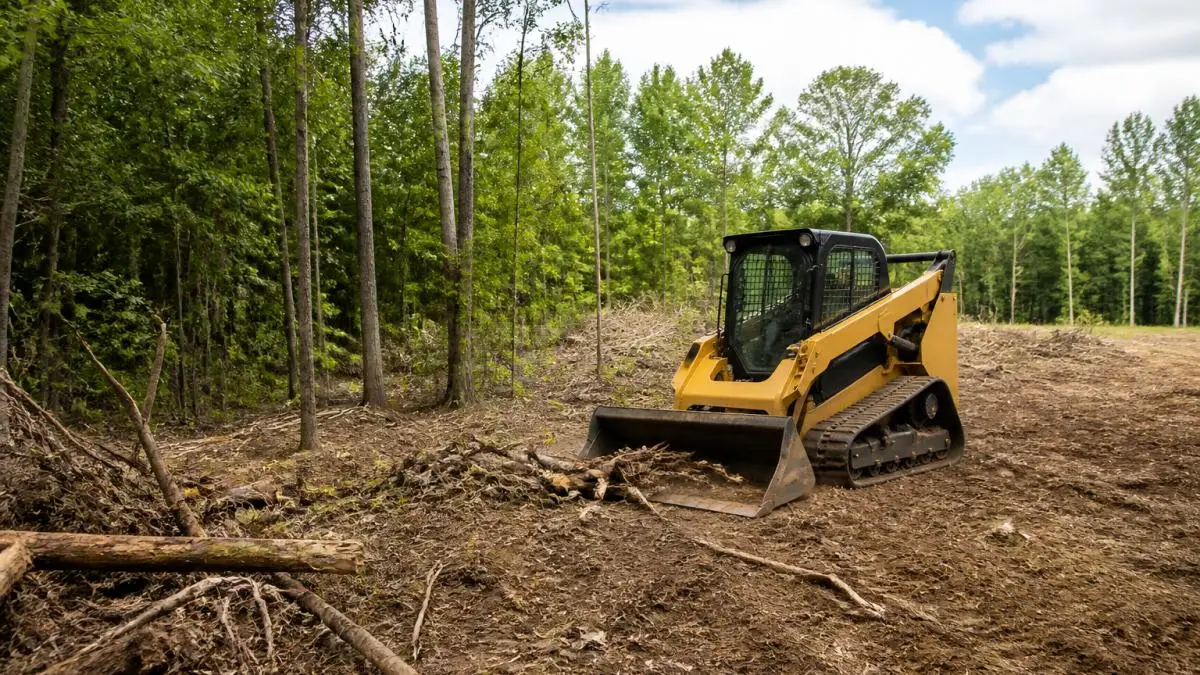
Last Updated: November 2, 2026
Quick Summary
Davis & Company provides land clearing services for small farms across Mid-Michigan, removing brush, saplings, stumps, and unwanted vegetation so ground can be used for pasture, crops, fencing, or building. On a small farm, that usually means selective clearing rather than scraping the lot bare. Free estimates are available through the website.
- Michigan farmland loss totaled 670,000 acres between 2002 and 2022, a 6% reduction.
- Average Michigan clearing runs $1,706 per acre, with most projects between $1,122 and $2,291 per acre.
- Light brush on open ground is the least expensive work, typically $400 to $1,200 per acre.
- Forestry mulching grinds brush and saplings into mulch on site, leaving root systems and topsoil largely intact.
- Grade to drain and stabilize bare soil quickly rather than leaving it exposed for weeks.
Table of Contents
- What Small Farm Land Clearing Services Actually Cover
- Forestry Mulching for Farms: What It Does to Brush and Saplings
- Farm Fence Line Clearing Without Losing Your Posts
- Land Clearing and Grading: Why the Second Half Decides the Result
- Small Acreage Site Preparation Before You Seed or Build
- Get a Free Estimate on Your Farm Clearing Project
- Frequently Asked Questions
What Small Farm Land Clearing Services Actually Cover
Across the country, farmland is disappearing fast. Michigan State University Extension’s research on farmland loss found that 670,000 acres of farmland were lost between 2002 and 2022, a 6% reduction in land used for farming.
Land clearing services are the work of removing brush, saplings, stumps, and unwanted vegetation from a property so the ground can be used for pasture, crops, fencing, or building.
K2 Excavating’s Michigan land clearing pricing guide puts the average at $1,706 per acre, with most projects landing between $1,122 and $2,291 per acre. Density drives the number more than acreage does.
- Light brush on open ground: the least expensive work, typically $400 to $1,200 per acre according to Fast Forward Plots’ Michigan clearing cost estimates
- Medium brush and saplings: more machine time, more handling, higher cost
- Fence lines and field edges: slow, detailed work that rewards a careful operator
If you want to confirm we take on agricultural clearing, see our land clearing service page.
Clearing methods and what each one leaves behind
Three methods cover most small-farm jobs. Each leaves the ground in a different condition, and that difference matters more than the method’s name.
| Method | What it removes | What’s left behind | Best for |
|---|---|---|---|
| Forestry mulching | Brush, saplings up to a few inches | Even layer of mulch on the surface | Pasture edges, fence lines, trails |
| Dozer clearing | Brush, trees, stumps, topsoil | Bare soil, debris piles to haul | Building pads, full reclamation |
| Hand and skid steer work | Small brush, fence-row growth | Minimal disturbance | Tight spots, selective clearing |
Mulching keeps nutrients and moisture on site. Dozer work gives you a clean slate but takes the topsoil with it unless you stockpile it.
Forestry Mulching for Farms: What It Does to Brush and Saplings
Forestry mulching is a clearing method that grinds brush, saplings, and small trees into mulch on the spot, leaving the root systems and topsoil largely intact.
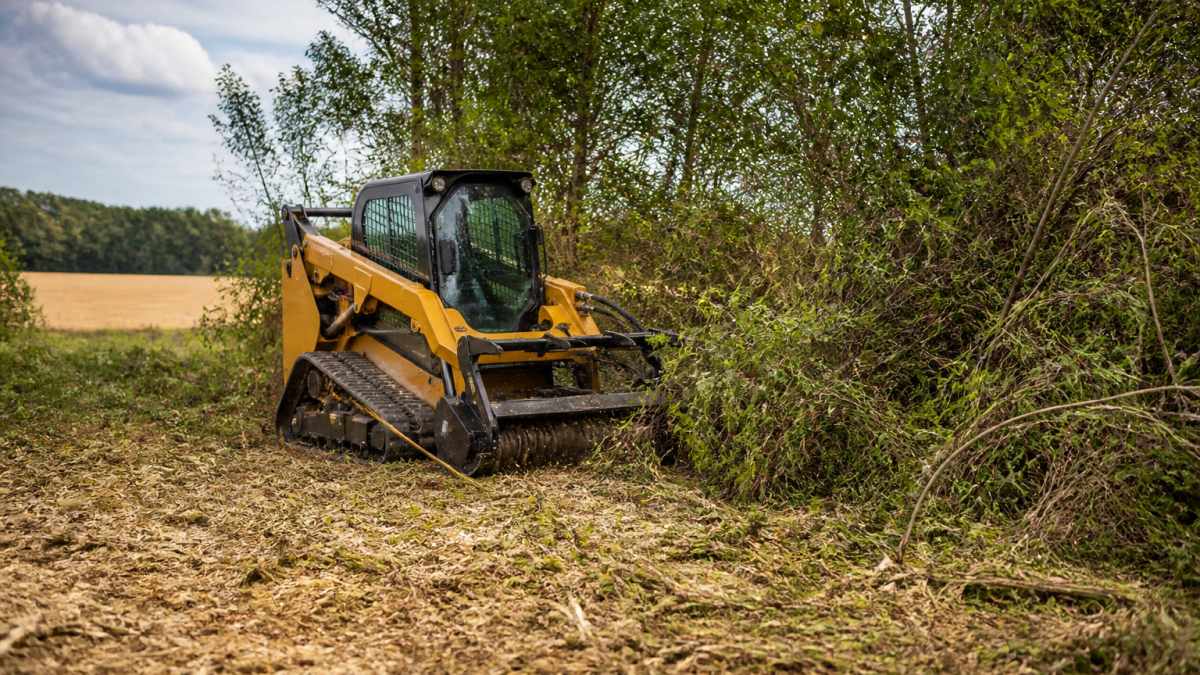
A mulching head on a skid steer chews through saplings and underbrush and spreads the chips as it goes. The mulch layer holds moisture and slowly breaks down, which supports soil health rather than stripping it. American Farmland Trust and NRCS findings on soil health link soil health practices directly to higher farm profitability, and leaving organic matter in place is one of the simplest versions of that.
Where it falls short: mulching doesn’t remove stumps or grade a site. If you’re building, you’ll need excavation afterward. For pasture reclamation and vegetation management, it is often a practical choice. We offer forestry mulching across Mid-Michigan for this kind of work.
Farm Fence Line Clearing Without Losing Your Posts
Fence line clearing is the targeted removal of brush and saplings along an existing fence so the wire, posts, and gates stay functional and accessible.
A common mistake is hiring someone who treats a fence row like open ground.
What a proper fence line job includes:
- Cutting brush back far enough to walk the line with a vehicle
- Leaving posts and wire intact and visible
- Mulching the cuttings in place rather than piling them
- Clearing gate openings and corners first, since those fail first
If your posts are already heaved or rotten, clearing is the moment to reset them. Pairing the work with site prep and grading saves a second mobilization.
Land Clearing and Grading: Why the Second Half Decides the Result
Land clearing and grading are two separate jobs, and the second determines whether the first was worth doing. Clearing removes vegetation. Grading shapes the ground so water runs where you want it and equipment can work on it.
What grading actually does on a small farm:
- Site leveling for barns, pads, and equipment storage, cut to a consistent grade so structures sit true
- Driveway grading and gravel road restoration so trucks and trailers can reach the back acres in wet weather
- Drainage shaping, crowning lanes, cutting swales, and setting grades so surface water moves off low ground instead of sitting on it
- Compaction control, compacting under building pads and driveways, but loosening in planting areas where roots need to breathe
Water follows grade. If a freshly cleared field is left with even a slight bowl, that bowl becomes a mud hole every spring. If a pad is built on loose fill, it settles unevenly and cracks the slab above it.
Soil health after clearing, the part most crews skip
Clearing disturbs soil.
Bare, graded soil on a slope can be carved by the first hard rain.
Watch out: grading that pushes topsoil into a pile and leaves subsoil on the surface will grow poor pasture and hold water badly.
If your posts are already heaved or rotten, clearing is the moment to reset them. Pairing the work with site prep and grading saves a second mobilization.
Small Acreage Site Preparation Before You Seed or Build
Small acreage site preparation turns cleared ground into ground you can plant, seed, or build on. Clearing is step one. Prep is everything after it, and on a small farm the sequence is where projects succeed or stall.
The sequence that works:
- Clear brush and saplings, mulching where possible
- Remove stumps and roots in the footprint that will be built or planted
- Grade to final shape and establish drainage
- Stabilize bare soil before it rains
- Seed or build
Step four is the one people skip, and it’s the one that costs the most to fix later. Bare, freshly graded soil on a slope will wash. Hydroseeding can hold bare ground in place while grass establishes. Learn more about hydroseeding services if you’re at that stage.
Permits and environmental rules to check before you cut
Before equipment shows up, confirm what the ground is and what rules apply. Two categories trip up small farm owners most often: wetlands and waterways. Work in or near a wetland, stream, or ditch can require a permit, and moving soil in a floodplain can trigger review. The U.S.
A few habits that keep small-acreage prep clean:
- Identify wet spots, seeps, and drainage ways on the property before any machine enters
- Keep equipment out of saturated ground, which compacts badly and creates ruts that persist
- Ask whether the parcel has any conservation easement or cost-share program attached to it, since those can restrict clearing
- Confirm setbacks from wells, septic systems, and property lines before grading
Watch out: clearing first and asking about permits later can turn a straightforward pasture reclamation into a restoration project. Verify the rules for your parcel before the first pass.
Seasonal timing in a freeze-thaw climate
Prep work is not equally easy in every month. In a freeze-thaw climate, the ground cycles through frozen, saturated, and dry. Frozen ground can support heavy equipment with less rutting, making late winter a practical window for some clearing and grading.
Clearing and seeding are often done in separate windows rather than the same week. Planning around the seasons costs less than repairing damage from working ground at the wrong time.
If you want to confirm we take on agricultural clearing, see our land clearing service page.
Get a Free Estimate on Your Farm Clearing Project
Pricing for small farm land clearing depends on vegetation density, acreage, access, and how much grading follows. Contact Davis & Company through the website for current pricing or a quote.
We’re a family-owned company and have been since 2015. We work with small farm operations and welcome farms of different sizes. Free estimates, direct communication, and one team that handles clearing, grading, seeding, and the driveway work afterward.
Frequently Asked Questions
What land clearing services does a small farm need?
Most small farm operations need a mix of brush and underbrush clearing, fence line cleanup, stump removal, and grading. If you plan to seed or build, add small acreage site preparation and topsoil management to the list. A provider should walk the property with you and separate what has to be cleared now from what can wait a season, so you are not paying to clear ground you will not use yet.
Is forestry mulching a good option for clearing farm brush?
For light to medium brush, saplings, and undergrowth, forestry mulching is one option to consider. The machine cuts vegetation and leaves mulch on the surface, which limits debris hauling and helps hold soil in place. It is less suited to large mature trees or ground you need completely bare for construction.
Do I need a permit to clear land on my property?
It depends on where the work sits and what you plan to do afterward. Projects near water often trigger environmental permit requirements, and clearing that changes drainage or disturbs a wetland can bring in state and local review. Ask your contractor which approvals apply before any equipment arrives, and get the answer in writing. A provider familiar with local requirements can help you know which questions to raise with the local office.
What should I ask a land clearing contractor before hiring?
Ask what happens to stumps, brush, and debris, whether grading and erosion control are included or billed separately, and who is responsible if something on the property is damaged. Confirm they carry insurance, ask how they handle permit requirements, and get the scope in writing with a start window. For a farm, also ask whether they have worked with operations your size, since equipment and access needs differ from a commercial site.
If your back acres have gone from pasture to brush and you’re not sure where to start, that’s a conversation worth having. Davis & Company handles land clearing, site prep and grading, and hydroseeding as one connected project, with free estimates and flexible financing available. Get started with Davis & Company and request your free estimate on your farm clearing project.
